
Twenty Years of Code, and I Still Don't Know What Comes Next
The Green Phosphor Screen
My first lines of code were in Turbo C, on a DOS machine in a Chinese university lab. 2002. I still remember the green phosphor screen, the compiler errors I couldn't read, and the moment a program I wrote actually ran.
That feeling — the machine did what I told it to — never really went away. Through Java and EJB, through building recommendation systems, through starting a consulting company and growing it from 5 to 30 people, through joining AWS and writing cloud infrastructure, through moving to Seattle for another big tech job. Twenty years, a dozen languages, three countries. The feeling of making machines do what you tell them was always there.
Until recently.
The Shift I Didn't See Coming
I should have seen it earlier. I was writing C++ at work and building side projects on weekends. At some point in 2025, I noticed that my weekend projects were moving faster than my weekday work. Way faster.
It wasn't because the problems were simpler. It was because I'd started vibe coding — describing what I wanted, letting AI build it, iterating through conversation. Features that would have taken me a careful weekend of coding appeared in hours.
I told myself it was just a productivity tool. Like going from vi to VS Code. An upgrade, not a replacement.
But then I'd catch myself describing a complex system architecture to an AI, watching it implement the whole thing in minutes, and I'd think: When did I stop being the one writing code?
The Uncomfortable Middle
Here's where I am right now, and I suspect many of you are in a similar place:
I go to work every day on C++ infrastructure. The codebase is massive, the problems are complex, and I'm already using agentic AI tools in my daily workflow — even here. It helps. But the system is so complicated and the codebase so huge that AI alone can't handle it. Not at the scale and reliability level required. Not yet.
That "not yet" is what keeps me up at night. I'm not worried about next month.
But I'm thinking about next year. And the year after.
Every quarterly planning meeting, there's more talk about "AI-augmented development." Every team retrospective, someone mentions they used AI to prototype something in a tenth of the time. The managers are noticing. The executives are definitely noticing.
I'm not being dramatic. I'm describing what's happening in the rooms I sit in. You're probably seeing the same thing.
What Nobody Tells You About Career Anxiety
The articles about AI and programming tend to fall into two camps: "We're all doomed" or "Just learn AI tools and you'll thrive." Neither is honest.
The truth is messier. Some of us will be fine. Some won't. And right now, it's very hard to tell which group you're in. The uncertainty is the hardest part — not the change itself, but not knowing what to prepare for.
I run a scenario in my head sometimes: If my job disappeared tomorrow, what would I do? I have twenty years of deep technical experience. I've managed teams, built products, scaled infrastructure. I've lived in three countries and speak two languages.
And I still don't have a confident answer.
That's not paralysis — it's honesty. Anyone who tells you they have this figured out is either selling you something or not paying attention.
What I Do With the Anxiety
I build things.
On weekends, I work on open-source tools. Not mainly for profit — for survival. For the feeling of still being useful, still creating, still solving problems. For the portfolio of evidence that says "I can ship things in the AI era."
I write. You're reading the result right now. Partly to help other programmers navigating the same uncertainty. Partly to handle my own anxiety. Writing forces me to organize thoughts that would otherwise just circle endlessly.
I stay curious. I tried every major AI coding tool. I vibe-coded entire projects. I built this website in a weekend using the same tools that are threatening my career. Because understanding the thing that might replace you is better than pretending it doesn't exist.
And I talk to other programmers. Not on Twitter, where everything is either a hot take or a humble brag. In real conversations, where people admit they're scared, or confused, or quietly updating their resumes.
Those conversations are why I started The Last Programmers. Because the gap between the public discourse ("AI is amazing!" / "AI is overhyped!") and the private conversations ("I don't know what to do") is enormous. Someone should bridge it.
The Things That Still Matter
After twenty years, here's what I believe still matters:
Understanding. Not just code — systems, businesses, people. Why does this system work this way? What problem does it actually solve? What happens when it fails? AI can generate code, but it can't understand context the way someone who's been in the trenches can.
Judgment. Knowing when to use the simple solution and when to invest in the complex one. Knowing when the AI-generated code is good enough and when it has a subtle bug that'll cost you at 3 AM. This comes from experience, and experience takes time.
Adaptability. I've reinvented myself at least four times — from university researcher to startup engineer to company founder to big tech IC. Each transition was uncomfortable. Each one taught me that the ability to adapt matters more than any specific technical skill.
Connection. The programmers I know who navigate change best aren't the smartest or the most skilled. They're the most connected. They have people who tell them about opportunities, who share what's working, who help them see around corners.
What I Don't Know
I don't know if programming will exist as a mass profession in ten years. I think some form of it will, but it might look nothing like what I've spent my career doing.
I don't know if my specific skills — low-level systems programming, cloud infrastructure, distributed systems — will remain valuable or become commoditized.
I don't know if starting The Last Programmers is a meaningful contribution or just my way of coping with a transition I can't control.
What I Do Know
I know that the green phosphor screen in that university lab changed my life. I know that twenty years of building things with code gave me a way of thinking that goes beyond any specific language or framework.
I know that every era of programming felt like the final form — and none of them were. Maybe this one isn't either.
And I know that sitting with uncertainty is a skill, not a weakness. The programmers who pretend they have all the answers aren't braver. They're just less honest.
So here I am. Twenty years in, and I still don't know what comes next. But I'm going to keep building, keep writing, keep documenting this era — because that's what programmers do. We debug. Even when the thing we're debugging is our own relevance.
If you're in the same place, you're not alone. That's why this site exists.
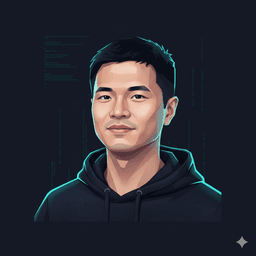
Drew
Chronicler · 20-Year Programmer